
8 min read
Plenty of scratches can be dealt with on your driveway with a cloth and £15 of product. Plenty of others cannot, and no amount of polishing will bring them back. The difference is depth, and there is a simple way to work out which one you have before you spend anything.
Modern car paint is layered: primer on the metal, then colour (the basecoat), then a clear lacquer on top. Most of what looks alarming is damage to that clear layer only.
The fingernail test
Run a fingernail gently across the scratch, at right angles to it. If your nail glides over without catching, the damage is in the clear coat and there is a good chance you can improve or remove it yourself. If your nail drops into the groove and catches, it has gone through the lacquer and into the colour or primer — that needs paint, not polish.
A second check: clean the area and look at the colour of the mark. White or grey inside the scratch usually means you are seeing primer. A brown or orange tint means bare metal is exposed and it will begin to rust, so don't leave it.
What you can genuinely fix yourself
- Swirl marks and wash marks — light circular hazing from automatic car washes or a dirty sponge
- Scuffs transferred from another surface — often another car's paint or rubber sitting on top of yours, not a scratch at all
- Shallow clear-coat scratches your nail glides over
- Small stone chips, cosmetically, using a touch-in pen to seal the metal and reduce how obvious they are
How to do it properly at home
Wash and dry the panel first. Polishing grit into paint causes more damage than the original scratch. Then work in the shade on a cool panel.
For transferred scuffs, try a clay bar or a tar and glue remover before anything abrasive — a surprising number of 'scratches' wipe off entirely.
For clear-coat marks, use a light polishing compound on a foam applicator, small area at a time, moderate pressure, straight passes rather than circles. Wipe clean and inspect often. You are levelling a few microns of lacquer, so stop as soon as it looks right — continuing is how people burn through the clear coat and turn a £0 job into a respray.
Finish with a wax or sealant so the polished area is protected.
Where DIY makes it worse
- Toothpaste, baking soda and household abrasives — uncontrolled grit that hazes the surrounding paint
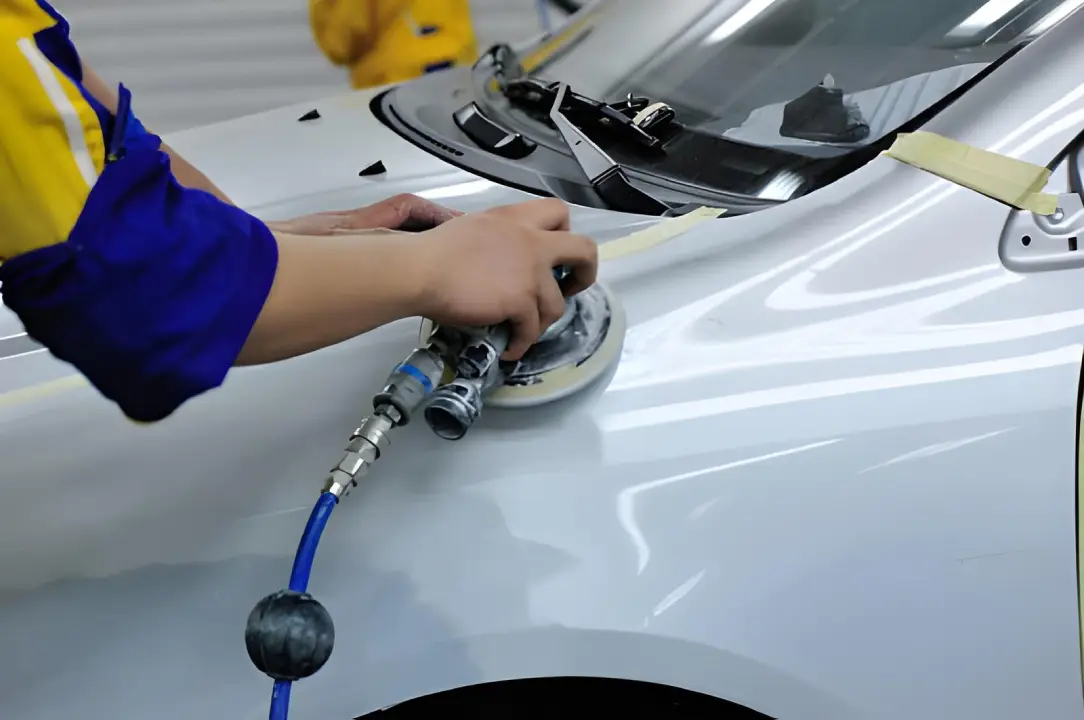
- Machine polishers on edges and body lines, where the clear coat is thinnest
- Touch-in paint applied too thickly, leaving a raised blob that is harder to correct than the chip was
- Scratch pens on a deep scratch — the colour sits in the groove and dries a different shade and texture
- Ignoring exposed metal until it blisters, which turns a paint job into a rust repair
When it needs a bodyshop
If your nail catches, if you can see primer or metal, if the scratch crosses two panels, if it runs over a body line, or if it is on a solid black, pearl or three-stage finish where any mismatch shows — that is refinishing work.
Deep scratches, keyed panels and anything down to bare metal need to be flatted back, primed, colour-matched, sprayed and lacquered, then blended into the surrounding panel so the repair cannot be seen. Done properly it is invisible and permanent; done cheaply it flakes or shows as a patch within a year.
What proper repair involves
For localised damage we often use a SMART repair — a contained repair to part of a panel rather than the whole thing, which keeps cost and time down. For longer or multiple scratches, the panel is prepared, sprayed and lacquered in full, with the colour blended into adjoining panels so light travels across the car without revealing a join.
We read the vehicle's paint code, then adjust and spray out test cards to allow for how the original paint has aged before anything goes near your car. That step is the difference between a repair you can find and one you cannot.
Frequently asked questions
- Can toothpaste really remove car scratches?
- It can very slightly abrade a clear-coat mark, but it is an uncontrolled abrasive not designed for automotive lacquer and it commonly leaves dull hazing around the area. A proper polishing compound costs a few pounds and does the job safely.
- How do I know if a scratch has gone through the paint?
- Use the fingernail test. If your nail catches in the scratch it has gone through the clear coat. White or grey inside the mark means primer is showing; a brown tint means bare metal, which will start to rust.
- Will a scratch repair pen fix a deep scratch?
- No. On deep scratches the pen simply fills the groove with colour that dries to a different shade and texture, and it usually looks worse than the scratch. Pens are best used to seal small stone chips.
- Should I claim on insurance for a scratch?
- Usually not. Most single-panel scratch repairs cost less than or close to a typical excess, and paying privately protects your no-claims discount. We can price the repair so you can compare before you decide.
Need this doing properly?
See how we handle this work, or send photos for a free, no-obligation estimate.
Dent & scratch repairs →