How repairs work · 10 min read
Respray decisions in a nutshell
- Respray scope ranges from a partial blend up to a full colour change.
- Preparation, not spraying, is what mostly determines time and cost.
- Colour changes may need door shuts and engine bay areas finished too.
- Metallic and pearl paints generally add time and cost over solid colours.
- A free estimate is the only reliable way to get an exact price for your car.
Partial, panel and full respray, what is the difference
A partial respray covers a section of a single panel, blended into the surrounding original paint, similar in principle to a SMART repair but often used for slightly larger areas of damage. A panel respray refinishes a complete component, such as one door or the bonnet, edge to edge, so there is no blend line on that panel at all, only where it meets its neighbours.
A full respray covers every exterior panel of the car in one process, which is what is required for a genuine colour change, or where damage or fading affects the vehicle more widely. Each step up in scope brings more masking, more preparation and more spray time, which is reflected in the price.
How the work is actually carried out
- 01Strip trims, badges and fittings that would be damaged by masking tape or overspray.
- 02Sand back the existing paint to key the surface, and remove any rust or old filler that needs attention.
- 03Fill and shape any damaged areas, then apply primer and block sand it smooth.
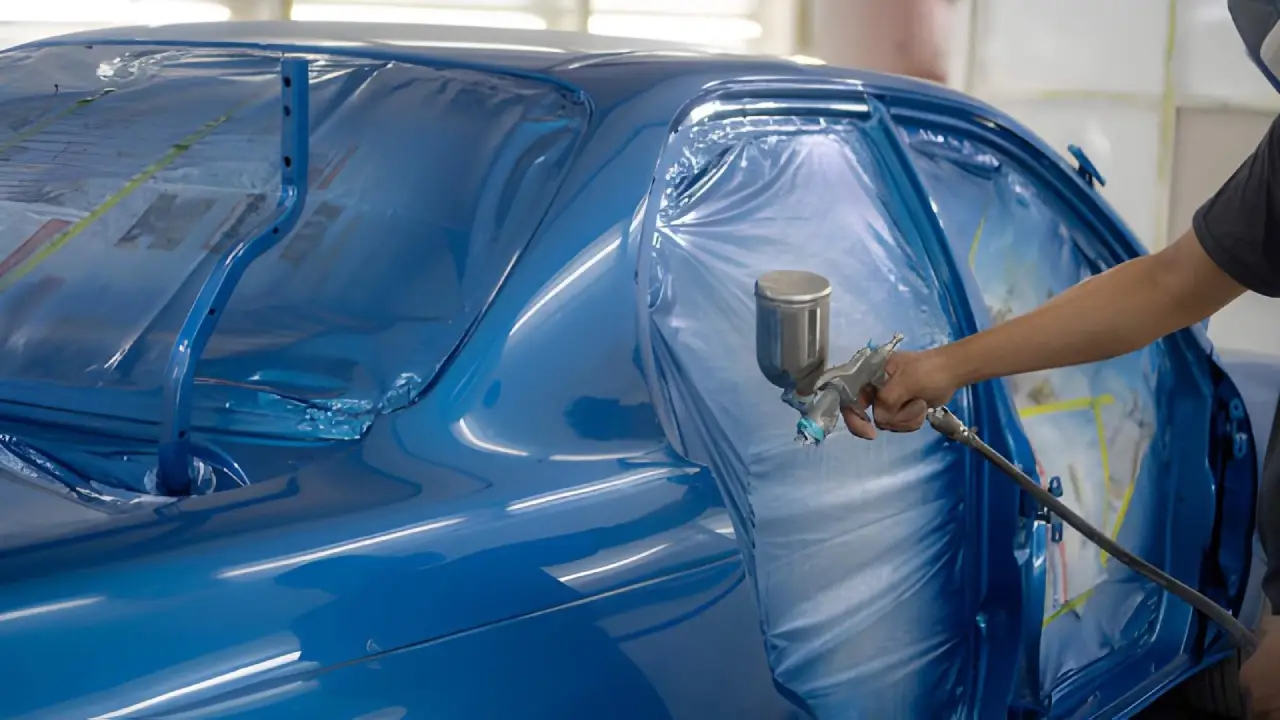
- 04Mask off everything that is not being sprayed, including glass, seals and adjacent panels.
- 05Apply basecoat colour in even, controlled passes inside a dust controlled booth.
- 06Apply lacquer over the basecoat to protect it and give the final gloss level.
- 07Bake the paint at a controlled temperature to cure it fully before handling.
- 08Cut back and polish the finish, then refit all trims and badges.
Why preparation drives the price more than spraying does
It is tempting to think a respray is mostly about the spraying itself, but in practice preparation takes up the majority of the time on most jobs. Sanding, filling, masking and priming all have to be done thoroughly for the paint to sit correctly and last, and rushing this stage is the most common cause of a poor finish later on.
This is why two quotes for what looks like the same job can differ, one may include more thorough preparation, better masking of adjacent panels, and a proper bake cycle, while a cheaper quote may be cutting corners in ways that only become visible months later as the paint fades unevenly or lifts at the edges.
Colour changes bring extra considerations
A genuine colour change is more involved than repainting in the existing colour, because areas that are not normally visible, such as door shuts, the inside of the boot lid and parts of the engine bay, are usually still finished in the original colour from the factory. For a properly finished colour change these areas often need attention too, otherwise the new colour on the outside will not match what is visible when a door or the boot is opened.
Respray price ranges to expect
| Scope of work | Typical indicative range |
|---|---|
| Single panel respray | £250 to £600 |
| Multiple panel respray, three or four panels | £600 to £1,400 |
| Full respray, existing colour | £1,500 to £3,500 |
| Full colour change, including shuts | £2,500 to £5,000 plus |
How long each type of job takes
A single panel respray can often be completed within a day or two once preparation is factored in, while a multi panel job naturally takes longer as each additional panel adds masking, spraying and curing time. A full respray or colour change is the most involved, since the whole car needs stripping down, preparing and refitting, and quality checks are carried out across every panel before the car is handed back.
Metallic and pearl finishes generally add time compared with solid colours, because they are applied in thinner, more controlled coats and often need an additional tinted lacquer stage to achieve the correct depth and sparkle.
Looking after a fresh respray
- Avoid automated car washes for the first few weeks while the paint fully hardens.
- Hand wash with plenty of water and a soft mitt rather than a dry wipe down.
- Avoid waxing or polishing immediately, the paint needs time to cure fully first.
- Park undercover where possible to reduce UV and temperature swings early on.
Questions people ask us
- How is a panel respray different from a full respray?
- A panel respray refinishes one component edge to edge, while a full respray covers every exterior panel of the vehicle in one process.
- Do door shuts need to be resprayed too?
- Only for a genuine colour change, otherwise the door shuts are usually left in the factory colour since they are not normally visible.
- Why do metallic and pearl colours cost more to respray?
- They require thinner, more controlled coats and sometimes an additional tinted lacquer stage, which adds time compared with solid colours.
- How soon can I wash my car after a respray?
- It is best to avoid automated washes for a few weeks and hand wash gently while the paint fully hardens.
- Will a respray match the rest of my car exactly?
- A properly matched and blended respray should be very close to invisible, which is why colour matching and blending technique matter so much.
Where to go next
Curious what your respray would actually cost?
Every car and every colour is different, so send us the details and photos for a free, no-obligation estimate tailored to your vehicle.
Workshop hours
Monday – Friday 8:30am – 6:30pm
Saturday 9:00am – 4:00pm
Sunday Closed