How repairs work · 9 min read
Car bodywork repair covers a wide range of damage, from stone chips and scratches through to dents, cracked bumpers, rust and collision damage, with a different repair method suited to each type.
To give private and fleet customers a clear map of common bodywork damage types and the repair method used for each, so they understand what a quote covers.
Why the repair method depends on the damage type
Bodywork damage covers a lot of ground, from a tiny stone chip that barely marks the paint through to structural collision damage that needs specialist equipment to correct. Using the wrong method, for example trying to fill a deep crease that should really be replaced, or repainting a whole panel for a chip that could be spot repaired, either wastes money or leaves a repair that will not last.
Getting the method right starts with an honest assessment of what has actually happened to the panel, how deep the damage goes, whether the metal or plastic has moved or stretched, and whether the surrounding paint is sound enough to blend into.
Damage type to repair method
| Damage type | Typical repair method |
|---|---|
| Stone chips | Clean, fill and blend with a localised SMART repair |
| Light scratches | Sand, fill if needed, blend paint into surrounding area |
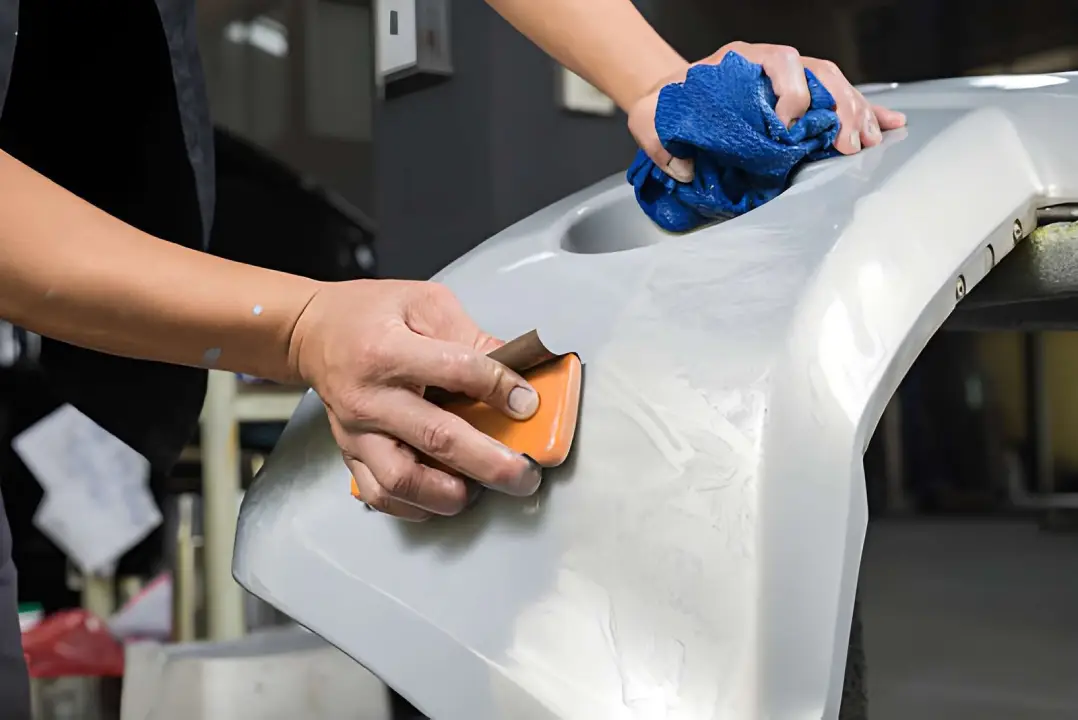
| Scuffs on bumpers | Sand back, prime and refinish the affected section |
| Shallow dents, paint intact | Paintless dent removal |
| Deeper dents or creases | Filler and paint repair, or panel replacement if severe |
| Cracked plastic bumpers | Plastic welding or repair kit, then prime and paint |
| Rust and corrosion | Cut back affected metal, treat, and repair or replace the panel |
| Hail damage | Paintless dent removal across multiple shallow dents |
| Structural collision damage | Panel and structural repair using specialist equipment, then refinish |
Stone chips and light scratches
Stone chips are usually small and shallow, affecting only the top paint layers, and are typically fixed with a localised repair that fills and blends the chipped area into the surrounding finish. Light scratches that have not gone through to bare metal can often be treated in a similar way, sanded smooth, filled if there is any depth to them, then blended so the repair does not stand out.
Dents and creases
Shallow dents where the paint has not cracked are good candidates for paintless dent removal, since the metal can be massaged back without any filler or repainting. Deeper dents, sharp creases, or damage where the paint has already cracked need a conventional filler and paint repair, and where the metal has been stretched or torn too far, panel replacement can be the more sensible option rather than trying to force a repair.
Cracked bumpers and plastic damage
Modern bumpers are plastic rather than metal, and cracks or splits are often repairable using plastic welding or a specialist repair kit before priming and painting, rather than automatically requiring a full bumper replacement. Whether repair or replacement is the better route depends on the size, position and structural role of the crack, so it is worth getting an assessment rather than assuming a cracked bumper always needs replacing.
Rust and corrosion
Rust needs to be dealt with by cutting back to sound, unaffected metal, treating the area properly, then repairing or, where the corrosion has spread too far, replacing the panel. Painting over rust without addressing what is underneath is not a lasting fix, since corrosion will continue to spread beneath the new paint if it has not been properly cut out and treated first.
Hail damage across multiple panels
Hail typically leaves numerous small, shallow dents spread across bonnets, roofs and wings, and because each dent tends to be shallow with the paint intact, paintless dent removal is generally the appropriate method, worked across every affected panel individually. Where any dent has cracked the paint it is treated separately with a conventional repair.
Structural collision damage
Where a collision has affected structural panels, the underlying alignment of the body needs correcting using specialist measuring and pulling equipment before any cosmetic work begins. Only once the structure is confirmed correct does the repair move on to panel work and refinishing, since paintwork applied over misaligned metal will not hide the underlying problem for long.
Questions people ask us
- Does every scratch need a full respray?
- No, most scratches confined to a small area can be sanded, filled if needed and blended into the surrounding paint without refinishing the whole panel.
- Can a cracked bumper always be repaired instead of replaced?
- Not always, it depends on the size and position of the crack, but many cracks can be repaired with plastic welding rather than needing a new bumper.
- Is rust repair worth doing or should the panel be replaced?
- It depends how far the corrosion has spread, limited surface rust can often be treated and repaired, while extensive corrosion may need panel replacement.
- How is hail damage repaired?
- Most hail dents are shallow with intact paint, so paintless dent removal is generally used across each affected panel.
Not sure what your bodywork damage needs?
Send us a photo and description of the damage and we will explain the most sensible repair method, with a free no-obligation estimate.
Colour matching, the essentials
- Different bodywork damage needs different repair methods to get a lasting result.
- Stone chips and light scratches are often handled with localised repairs.
- Shallow dents suit paintless removal, deeper damage needs filler or replacement.
- Cracked bumpers can often be repaired rather than replaced.
- Structural damage must be corrected before any cosmetic work is carried out.