How repairs work · 9 min read
In short
Panel beating is the skilled process of reshaping damaged metal bodywork back to its original form using hand tools such as hammers and dollies, along with techniques for shrinking and stretching metal.
To explain the traditional and modern craft of panel beating for customers curious about the trade or trying to understand a repair versus replace decision on their car.
What panel beating means
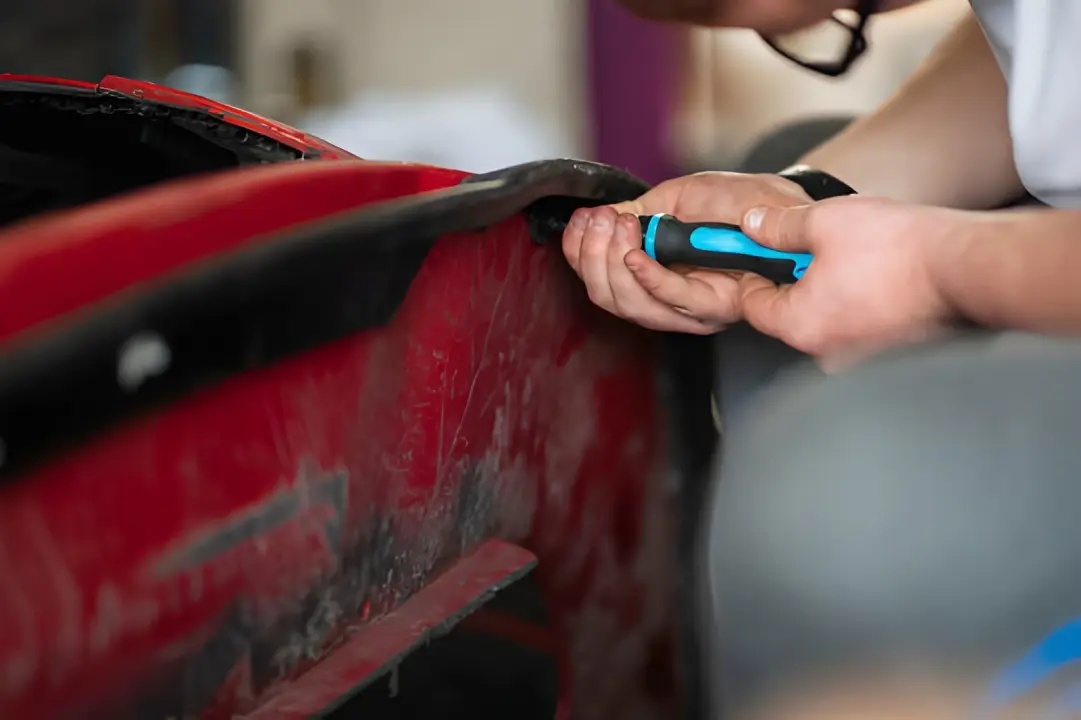
Panel beating is the traditional skill of reshaping damaged sheet metal back into its correct form, using a combination of hand tools and controlled force rather than simply replacing the damaged part outright. It has been part of the body repair trade for as long as cars have had pressed metal panels, and the underlying principle has not changed even as the tools and materials involved have moved on.
At its core, panel beating relies on understanding how metal behaves when it is worked, where it has stretched, where it has compressed, and how to move it back towards its original shape without weakening or cracking it.
The tools of the trade
- Dollies, shaped metal blocks held against one side of the panel to support it while it is worked from the other side.
- Panel hammers of various shapes and weights, used to tap the metal against the dolly and reshape it gradually.
- Slide hammers, used with a puller attachment to draw a dent outward where there is no rear access.
- Shrinking discs and heat, used to shrink metal that has stretched during an impact.
- Body files and sanding blocks, used to check and refine the panel's shape as work progresses.
Shrinking and stretching metal
When a panel is dented, the metal at the point of impact often stretches slightly, which is part of why a dent can look like it has more metal in it than the surrounding area once it is pushed back roughly into place. A skilled panel beater uses controlled heating and hammer work to shrink this stretched metal back down, restoring the panel's correct tension and shape rather than leaving a slightly proud, high spot.
The reverse can also apply, where metal needs to be stretched slightly to fill out a low area, achieved through careful hammer and dolly work that gradually moves the surface without introducing new stress points or weak areas.
Working modern high strength steel and aluminium
Modern cars increasingly use high strength steel and aluminium in their construction, both of which behave differently under a hammer compared with the milder steel used in older vehicles. High strength steel is less forgiving and can crack if worked incorrectly, while aluminium does not have the same memory as steel and requires different techniques and, often, dedicated aluminium-specific tools to avoid cross-contamination with steel particles that can cause corrosion.
This means a panel beater working on a modern vehicle needs to know which materials they are dealing with panel by panel, since treating aluminium the same way as steel, or vice versa, can produce a poor or even unsafe repair.
Repair versus replace, how the decision is made
- 01Assess how far the metal has stretched or torn, and whether it can be worked back safely.
- 02Check whether the damage is on a structural or safety-critical part of the body.
- 03Consider the cost and time of a skilled repair against the cost of a replacement panel.
- 04Factor in whether the panel has been repaired or filled before, which can limit further repair.
- 05Choose the option that gives the more durable and cost-effective outcome for that specific panel.
Why keeping original factory metal matters
Where a panel can be safely and properly repaired, keeping the original factory metal in place is often preferable to replacing it, since the factory panel has the exact strength, coating and fit that the vehicle was designed with. A well-executed repair by hand can restore a panel's shape and strength without the cost and fitting work involved in sourcing and fitting a full replacement panel.
Indicative panel beating costs
| Type of work | Typical indicative range |
|---|---|
| Small dent, hand worked and finished | £100 to £250 |
| Larger dent or crease requiring shrinking work | £200 to £450 |
| Panel repair including filler and paint blend | £300 to £700 |
| Complex structural or aluminium panel work | £500 to £1,200 plus |
Modern bonded and riveted construction
Many modern vehicles, particularly those with aluminium bodies, use bonded and riveted construction rather than traditional welding to join panels together. This affects how a damaged panel is removed and refitted, since the correct bonding adhesive and riveting technique must be used to restore the joint's original strength, rather than reverting to methods intended for older, all-steel welded structures.
It also means that panel beating today sits alongside a wider set of joining techniques, and a competent body shop needs to understand which method applies to a given vehicle before starting any panel work.
What to remember about panel work
- Panel beating reshapes damaged metal using hand tools rather than automatic replacement.
- Shrinking and stretching metal restores its correct shape and tension.
- Aluminium and high strength steel need different handling to older mild steel.
- Repair is chosen over replacement where it gives a durable, cost-effective result.
- Modern bonded and riveted construction adds another layer to how panels are joined.
Questions people ask us
- Is panel beating the same as dent removal?
- It overlaps but panel beating is a broader traditional metalworking skill, while paintless dent removal is a specific method for shallow dents where the paint is unbroken.
- Can aluminium panels be panel beaten like steel ones?
- Aluminium requires different techniques and often dedicated tools, since it behaves differently under a hammer and can be damaged if treated the same as steel.
- How is it decided whether to repair or replace a panel?
- It depends on how far the metal has stretched or torn, whether the panel is structural, and whether a skilled repair will be more cost-effective and durable than a replacement.
- Why would a panel beater shrink metal rather than just hammer it flat?
- Impacts often stretch metal, so shrinking it back restores the correct tension and shape rather than leaving a slightly high or uneven area.
Wondering if your panel can be repaired rather than replaced?
Send us photos of the damage and we will give you an honest, free, no-obligation estimate on the best way to put it right.